Skip to content

The Estate

A Small Village Held by Water, Stone, Gardens, and Light

The Elysian Gardens is not a hotel with rooms scattered across land. It is a coherent sanctuary estate: places to stay, eat, move, learn, gather, and be quiet, joined by paths, water, orchards, gardens, and daily rhythm.

One living arrangement

Each place distinct. No place stands alone.

Each place has a distinct function, but no place stands alone. The houses, guest pavilions, restaurant, Institute and movement spaces, water gardens, orchards, paths, and gathering places form one living arrangement. Architecture belongs to the slope, climate, materials, and life of the land.

Phase I

The body of the estate.

Main House

The anchor of stewardship, welcome, continuity, and Institute presence.

Nine Earthen Villas

Phase I is nine low-density earthen villas — six for guests and three for staff — built in local materials and one architectural family.

Restaurant Pavilion

The public table of the estate: food, conversation, seasonal dining, and regional welcome.

Institute & Movement Pavilion

A place for teaching, movement, meditation, research, lectures, and formation.

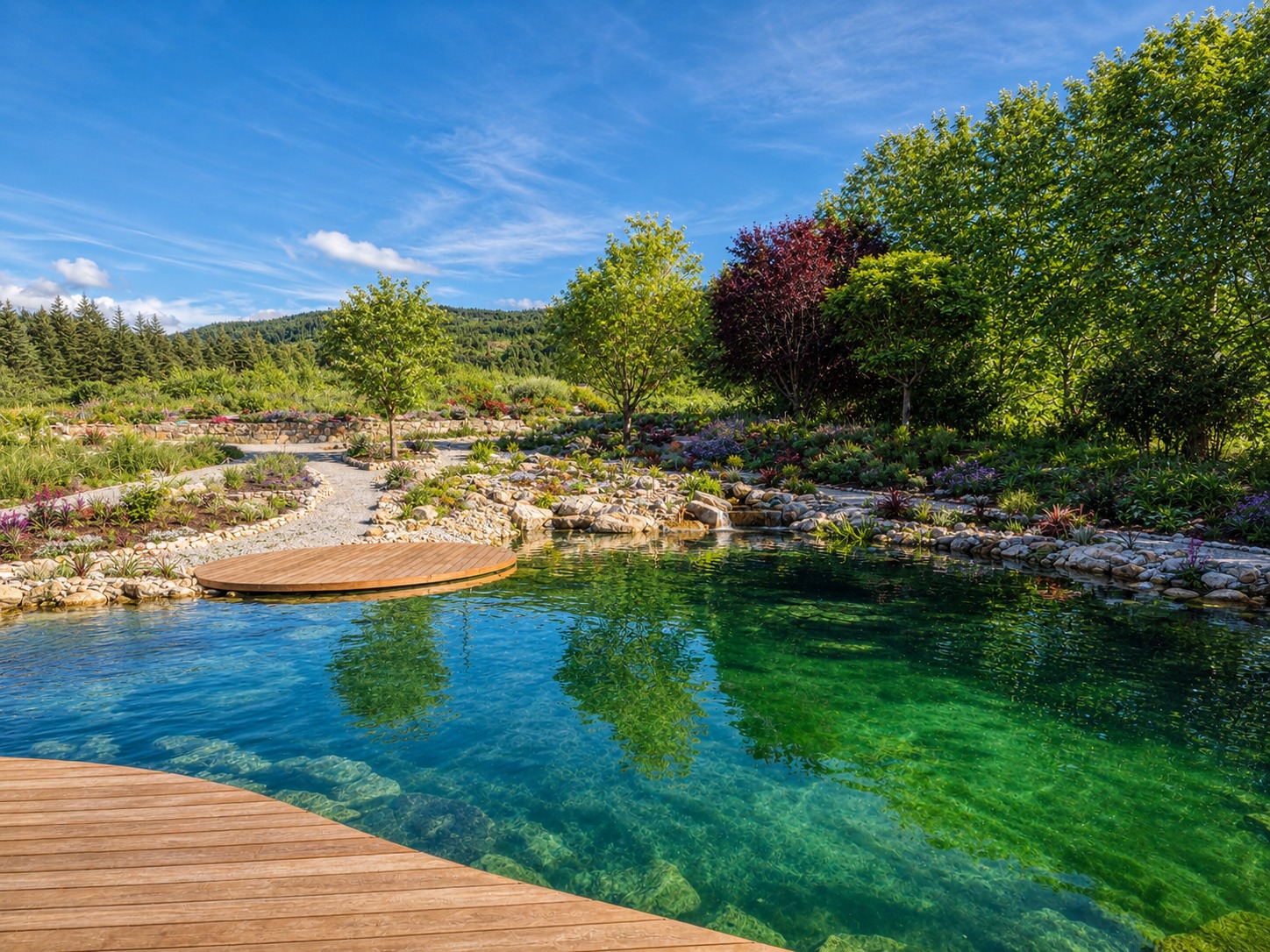
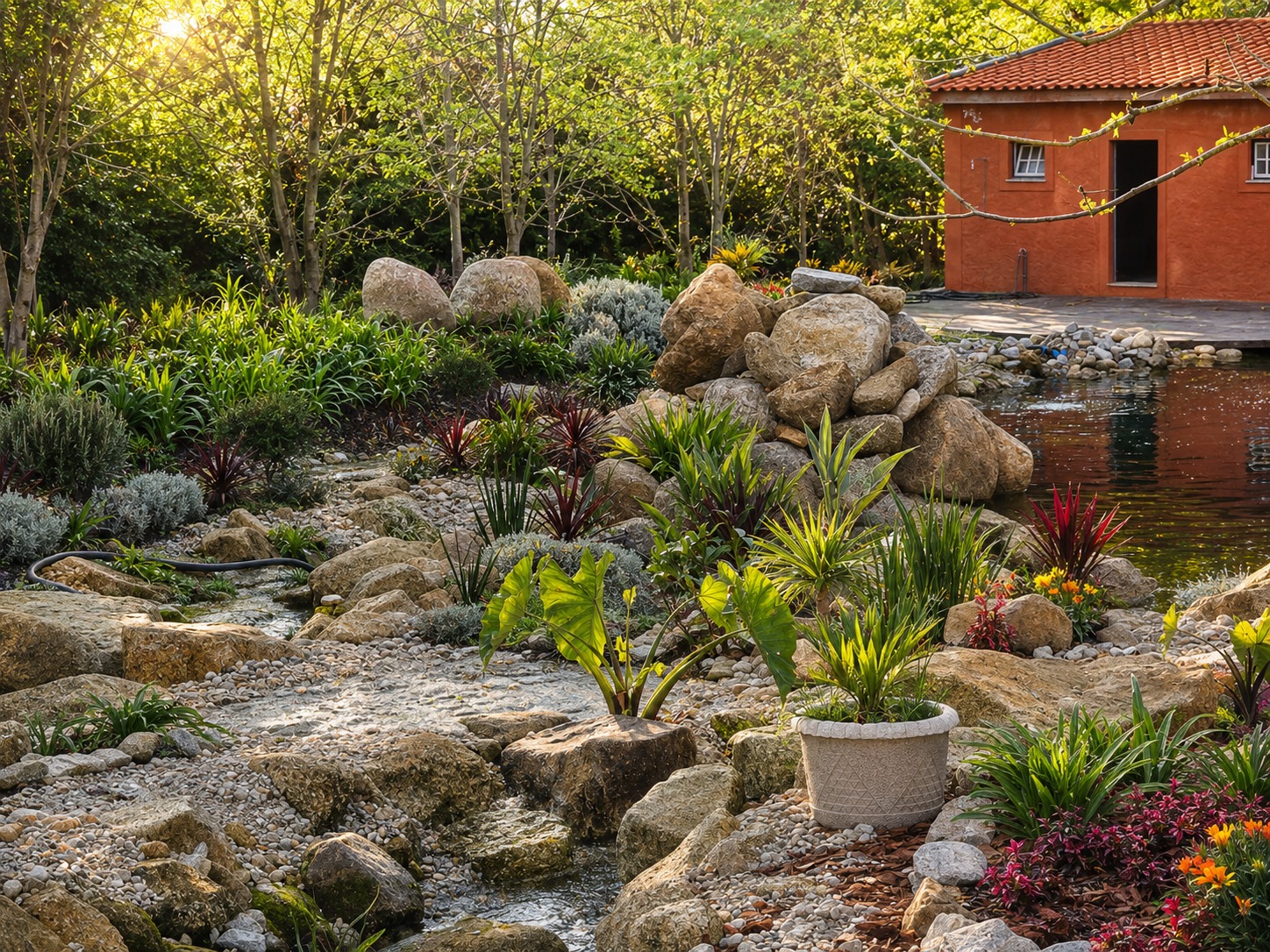
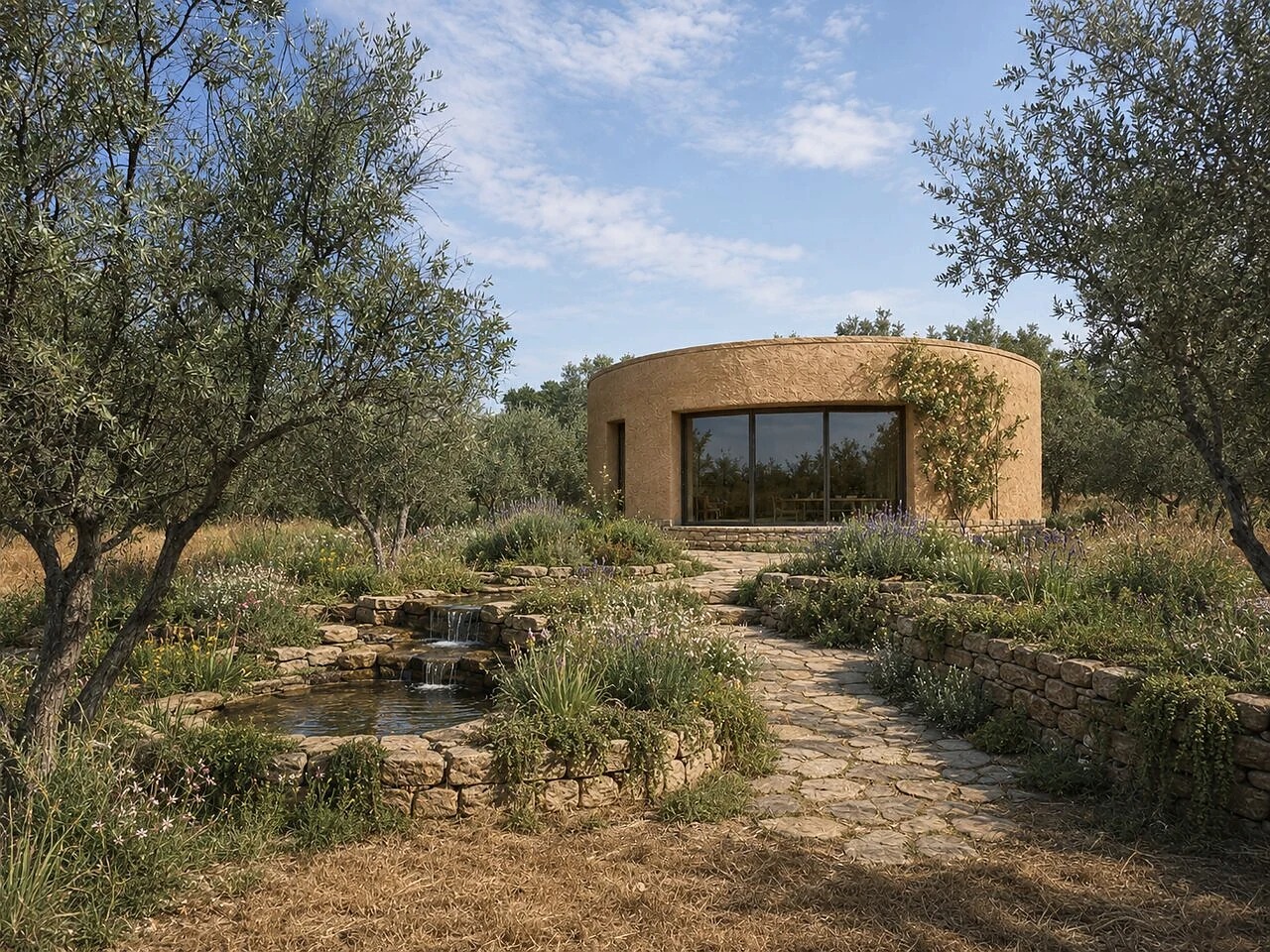
Water Gardens

Ponds, reflections, sound, cooling, biodiversity, paths, and contemplative beauty.

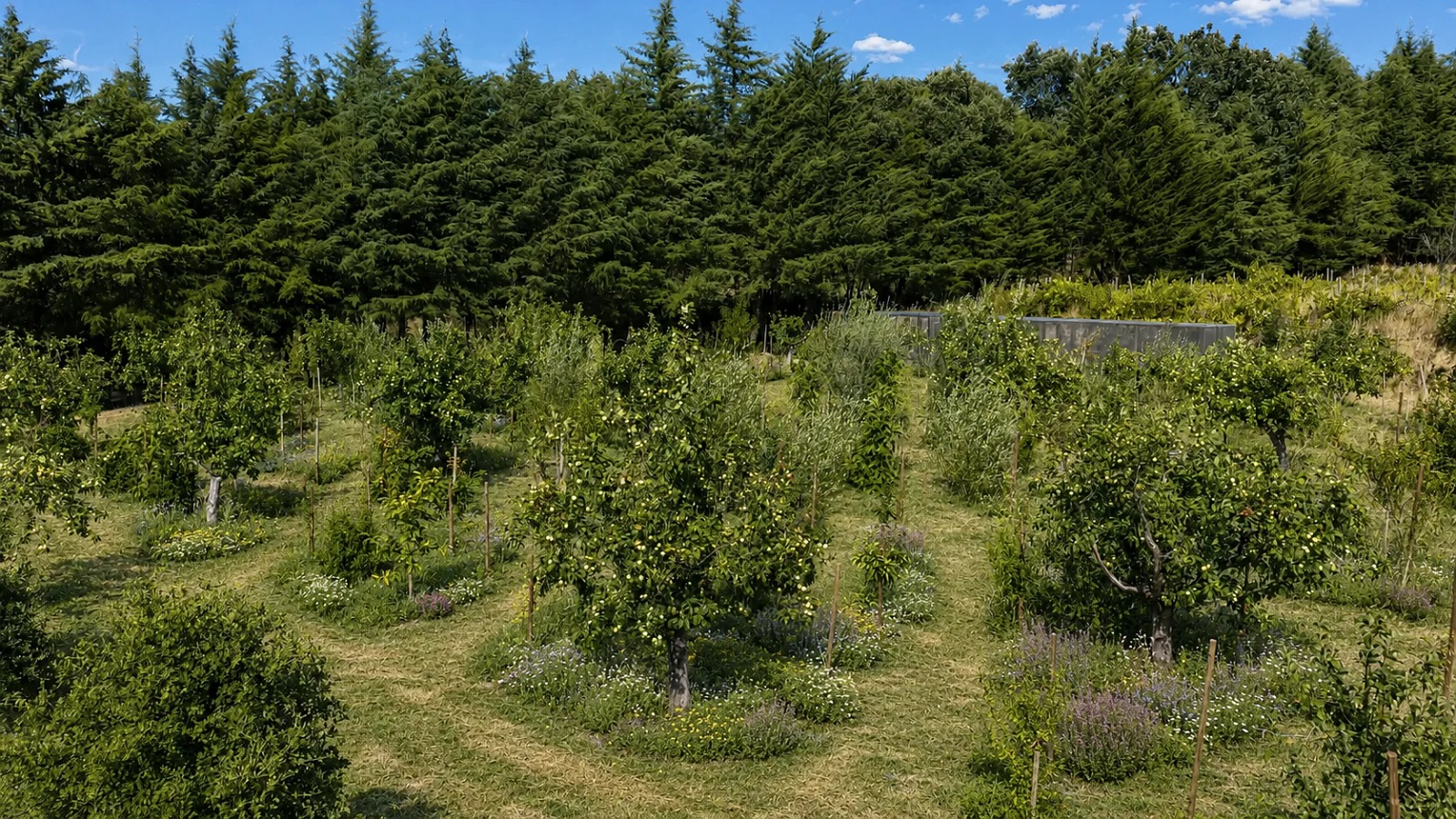
Orchards & Food Forest

The edible, ecological, seasonal, and regenerative body of the place.

The living grammar

Water, ecology, forest gardens, beauty.

Water as the soul of the place

Water gives beauty, resilience, cooling, food, sound, reflection, and life. Ponds, water gardens, wells, and seasonal lines are not decorative features; they are the living grammar of the sanctuary and a visible reminder that every form of abundance begins in relationship.

The ecological vessel

The land is the greater vessel that holds the guest. Soil structure, shade, clean water, biodiversity, tree cover, flowering, edible abundance, fire resilience, and the movement of air all shape the quality of experience. Ecological repair is therefore inseparable from hospitality.

Forest gardens & orchards

Fruit, herbs, vines, flowers, perennial food, habitat, soil cover, and human care are woven into a landscape that feeds both body and perception. The forest garden teaches reciprocity: the land nourishes the person; the person returns fertility, attention, and protection to the land.

Beauty & biodiversity

A living garden does not cover nature with decoration. It collaborates with water, season, slope, habitat, colour, scent, and time. Beauty emerges as the perceptible form of ecological relationship.

What you encounter

The features of the land.

Water Gardens

Ponds, reflections, lily pads, stone edges, morning mist, small bridges, and the changing life of light.

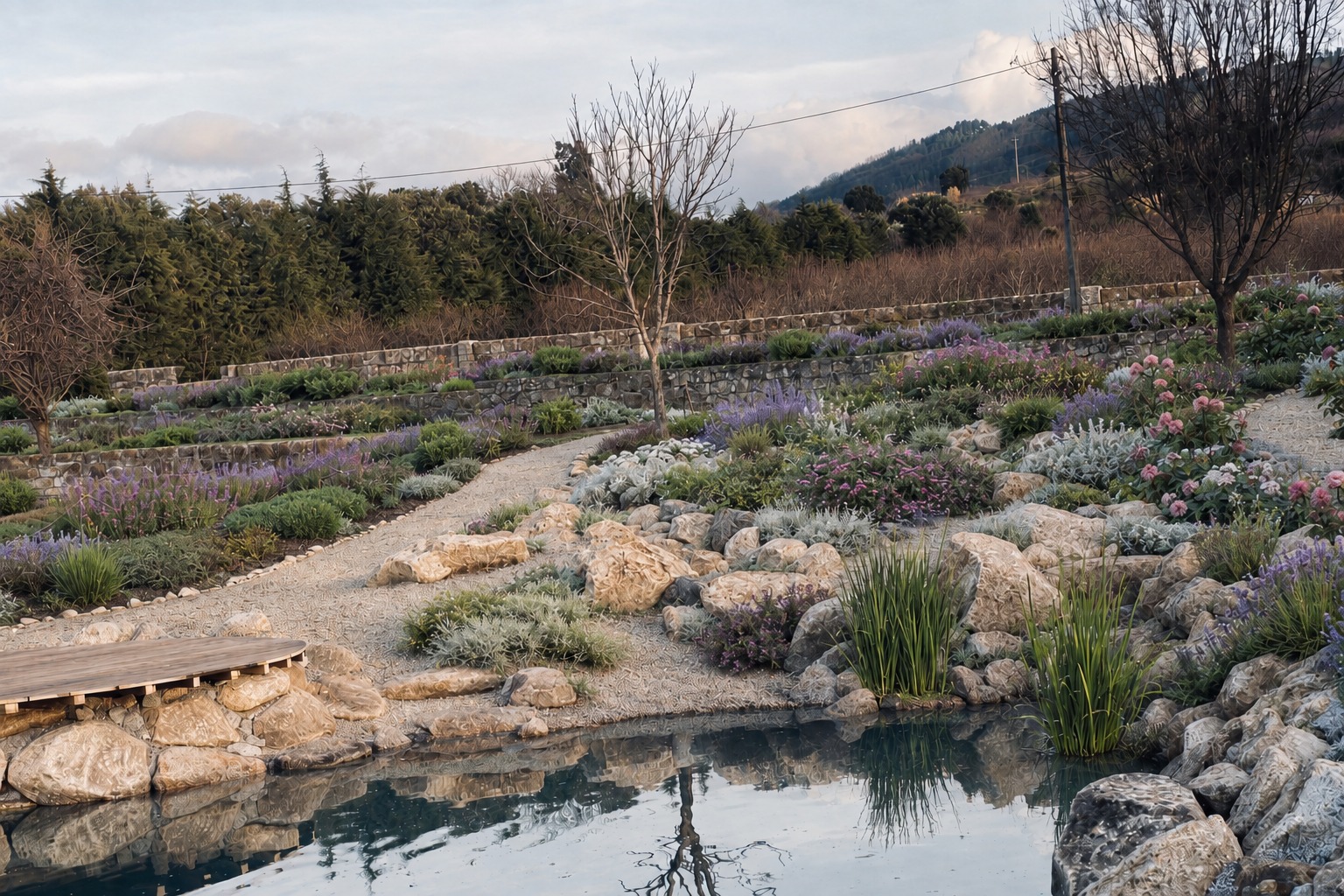
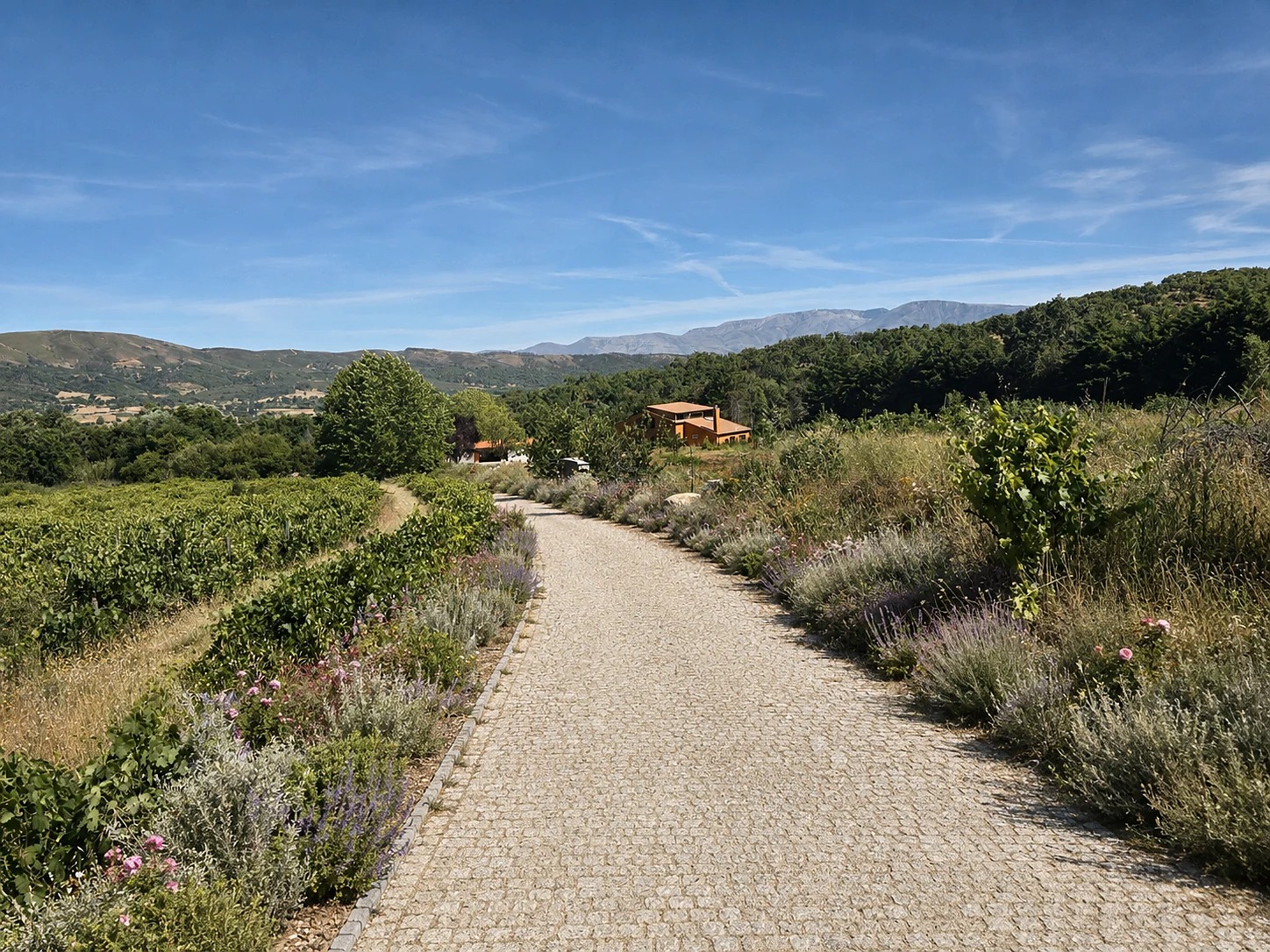
Terraces & Paths

Stone, slope, walking routes, shaded thresholds, viewpoints, and an arrival sequence shaped by the land.

Orchards & Food Forest

Fruit, herbs, vines, seasonal abundance, biodiversity, soil, shade, and cultivation.

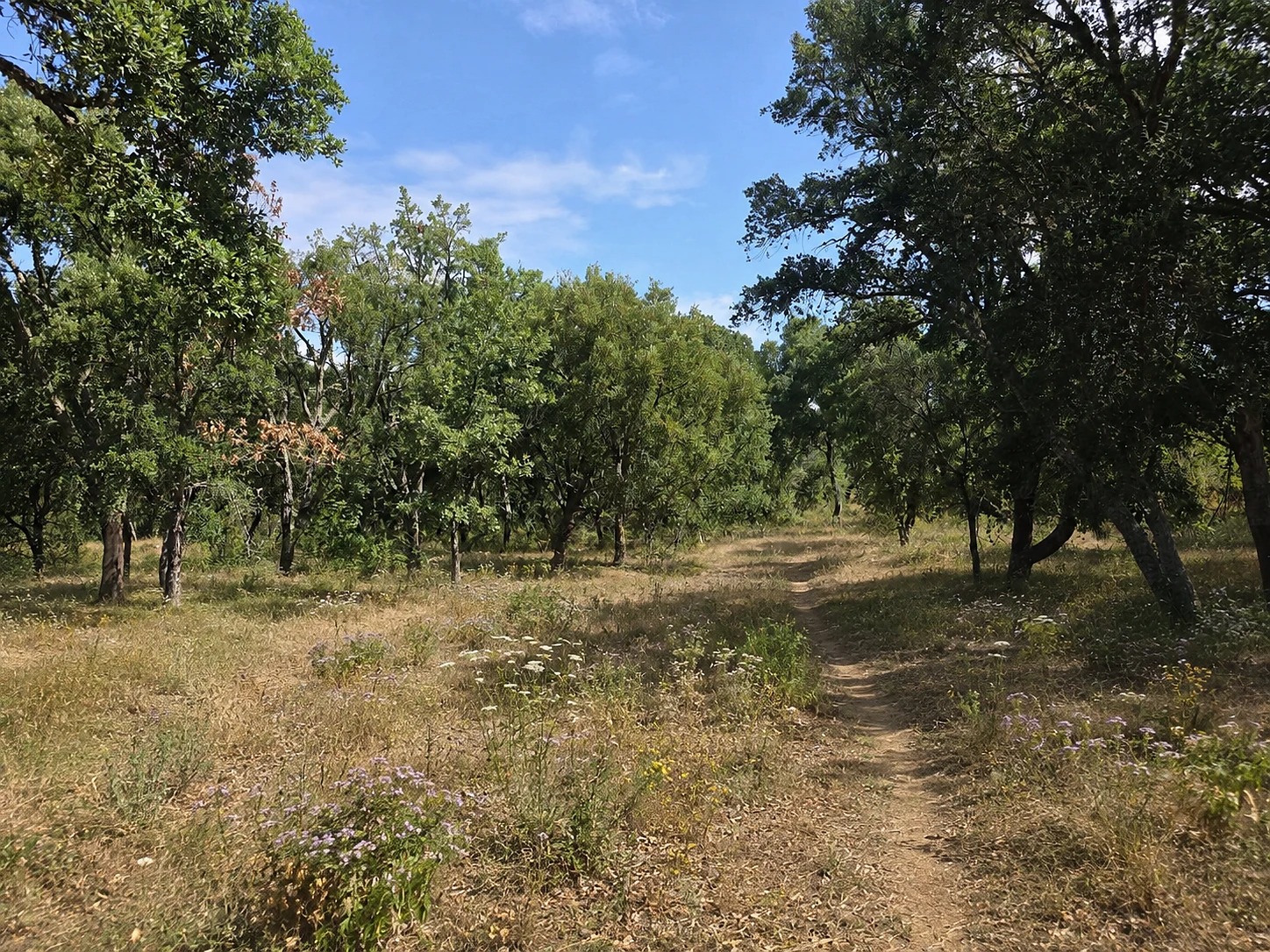
Mountain Atmosphere

Dawn, dusk, weather, silence, long views, and the quiet dignity of Central Portugal.

Architecture as aesthetic ecology

Placed with enough intelligence.

Timber, stone, shadow, water, proportion, natural ventilation, darkness, morning light, privacy, and view form a common language. Buildings should feel neither imposed upon the land nor disguised within it, but placed with enough intelligence that their presence completes a relation already latent in the site.

A village built around the life of the land.